CSRC adheres to the Company’s business philosophy of “Modesty leads to harmony; honesty builds credibility” and clearly indicates its ethical management attitude on the Company’s official website. In order to establish a corporate culture of ethical management and an optimal business operation model, there are regulations such as the Ethical Corporate Management Best Practice Principles and the Code of Ethical Conduct. The first point of CSRC’s brand value is to stick to its promises, and practical rules are as follows:
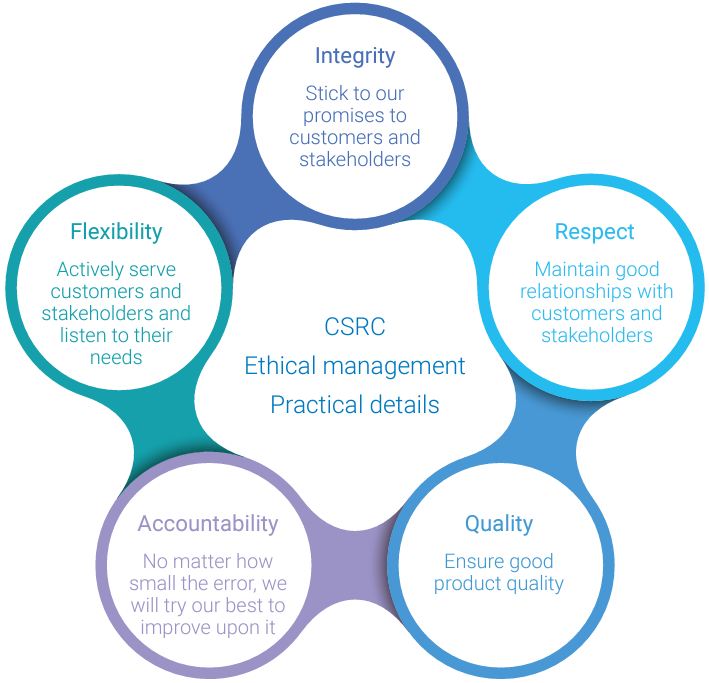
To ensure sound management of integrity in business operations, CSRC’s corporate governance unit is responsible for formulating and supervising the implementation of integrity management policies and preventive measures. They also report to the Board of Directors regularly (at least once a year). Reported items include:
- Assist in integrating ethics and moral values into the Company’s business strategy, and cooperate with the legal system to formulate relevant anti-fraud measures to ensure ethical management.
- Regularly analyze and evaluate the risk of dishonesty within the business scope, and formulate plans to prevent dishonesty, defining the Procedures and Guidelines for Conduct as applied to work operations within each plan.
- Plan internal organization, staffing structure and responsibility, and place mutual supervision and checks and balances on business activities with high risks of dishonesty in the business scope.
- Promotion and coordination of ethical policy advocacy training.
- Plan the reporting system to ensure the effectiveness of the implementation.
- Assist the Board of Directors and management to check and evaluate whether the preventive measures established by the implementation of integrity management are operating effectively, and regularly evaluate and follow the relevant business processes and make reports.
In order to make sure that employees, managers, and directors know and follow the Ethical Corporate Management Best Practice Principles, CSRC regularly conducts advocacy and training courses and incorporates them into the internal control system every year. CSRC always pays attention to the development of domestic and foreign standards for ethical management, revising the content from time to time according to the internal and external situation and developments. At the same time, it also encourages directors, managers, and employees to make suggestions while reviewing and improving the Company’s Ethical Corporate Management Best Practice Principles so as to enhance the effectiveness of the Company’s ethical management. CSRC’s Ethical Corporate Management Best Practice Principles and Code of Ethical Conduct are as follows:

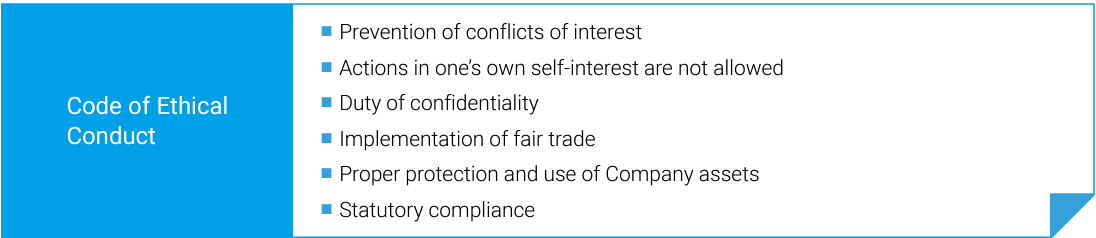
CSRC takes the highest professional ethical standards as a self-requirement, abiding by discipline and zero tolerance for corruption, and does not allow any bribery, fraud, misuse of Company assets or sacrifice of Company interests in exchange for personal gain. In the future, we will continue to evaluate the revisions of regulations such as governance, product liability, and environmental protection, in order to make adjustments in advance to meet regulatory requirements. To strengthen compliance with the Company's Ethical Corporate Management Best Practice Principles, ensuring employees fully understand the Company's regulations regarding receiving hospitality, socializing, gifts, and other benefits, specific Procedures for Receiving Hospitality, Social Interaction, and Gifts as well as Gift Giving and Receiving Management Regulations have been established.
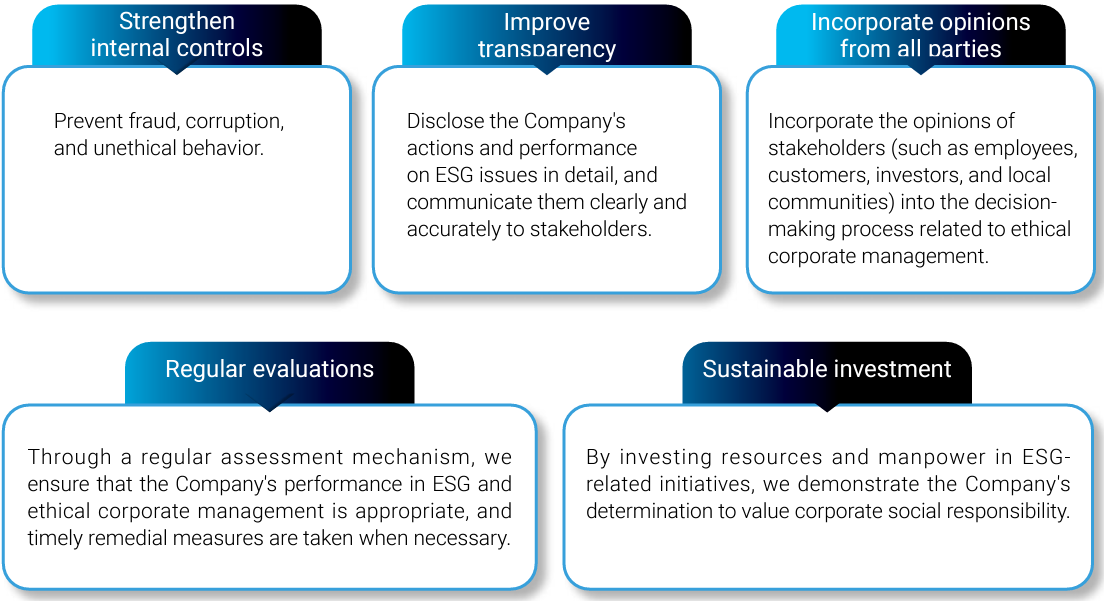
To strengthen our ethical corporate management policy and deepen ESG-related issues, CSRC has proposed a five-point strategy as the basis for future improvement.
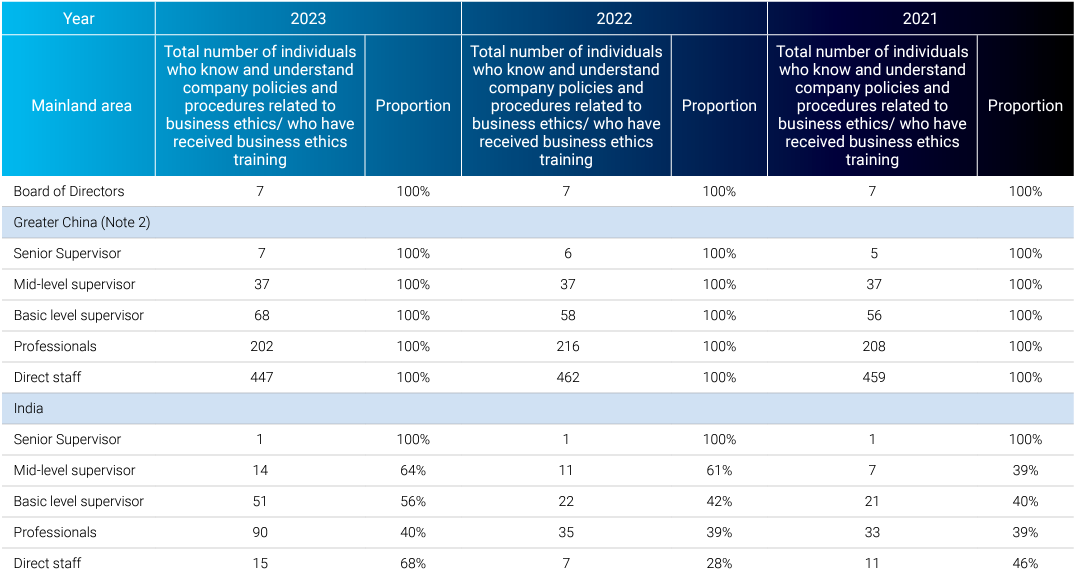
CSRC regularly organizes education, training, and advocacy for directors, managers, employees, and substantial controllers (non-shareholders, but individuals who through investment relationships, agreements, or other arrangements effectively control company actions), making them fully understand the Company’s determination, policies, prevention plans, and the consequences of dishonest behavior violations. In 2024, the directors and employees of CSRC participated in training courses related to corporate governance and integrity, including: Latest ESG Sustainability Policies and Net-Zero Carbon Emissions Impact on Financial Reporting, Analyzing Financial Statements and Enhancing Business Performance from an Operational Audit Perspective, Case Studies on Breach of Trust and Non-Standard Business Transactions: Strategies for Professional Ethics and Fraud Prevention for Auditors, Understanding and Responding to IFRS Sustainability Disclosure Standards S1 and S2: Evolution, Key Concepts, and Objectives, Compilation of Latest Regulations on Annual Reports, Sustainability Information, Financial Reporting, and Internal Control Practices, and Internal Control Practices for New ESG Regulations in Annual Reports. Through external and internal training, these courses strengthened employees’ understanding and awareness of corporate governance, integrity, and ethical behavior regulations. The percentage of employees and board members who underwent anti-corruption communication and training reached 90% across all operational sites, with 100% participation in Greater China, ensuring all employees at these sites are aware of and adhere to CSRC’s core values of integrity. Regarding business partners, CSRC emphasizes reliable supply chain relationships. In Greater China, including the Linyuan Advanced Plant, Maanshan Plant, Anshan Plant, and Chongqing Plant, suppliers accounting for approximately 97% of total procurement value signed integrity commitment statements as required. These suppliers are also required to protect employee human rights and provide legal working conditions while upholding ethical business conduct, achieving a 100% signing rate in 2024.
| Note: | Contracts signed by CSRC with agents, suppliers, clients, or other business transaction partners include clauses requiring compliance with integrity policies, allowing CSRC to terminate or rescind contracts at any time if the counterparty engages in dishonest behavior. |
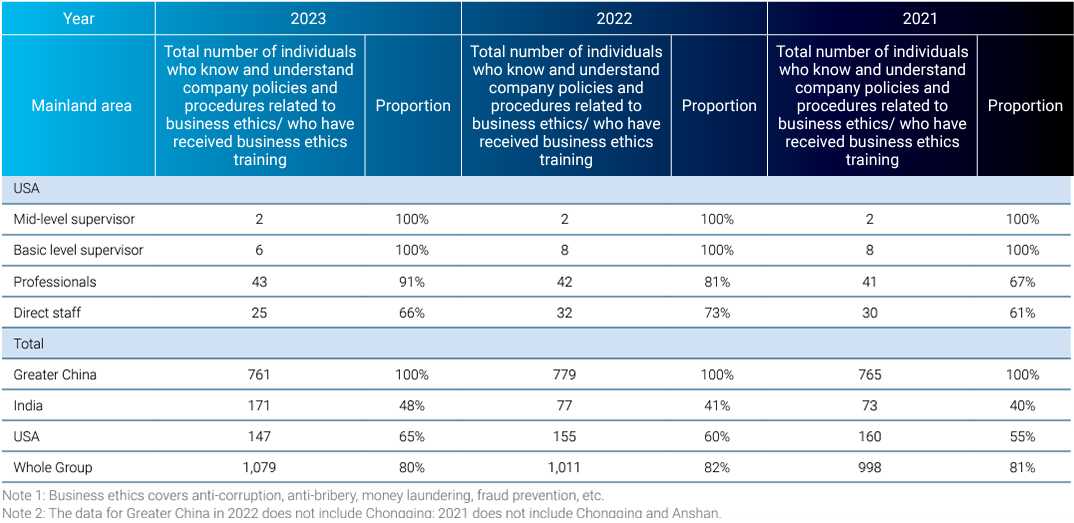
CSRC has established a risk assessment mechanism for dishonest conduct in accordance with the Ethical Corporate Management Best Practice Principles. It regularly analyzes and evaluates business activities with a high risk of dishonesty in the business scope and establishes an effective accounting system and internal control system. No off-the-books accounts or secret accounts shall be kept and reviews should be undertaken at any time to ensure that the design and implementation of the system continues to be effective.
The internal audit unit formulates relevant audit plans based on the results of assessments regarding the risk of unethical behavior. These plans include the audit targets, scope, items, and frequency, and are used to examine the implementation and compliance of prevention measures. For example, the Audit Office conducts annual assessments of corruption event types and frequencies based on the scale of each plant, emergency incidents, and project progress (e.g., new construction, expansion, major overhauls, or other special projects), and accordingly develops an annual audit plan. When necessary, external accountants may be engaged to assist. The results of these audits must be reported to senior management and compiled into an audit report submitted to the Board of Directors at least once a year. In addition to routine annual audit tasks, the Audit Office specifically analyzes red flags indicating potential corruption events (such as incomplete approval procedures in procurement cases, lack of authorization by responsible supervisors, or unreasonable designation of suppliers). CSRC conducts annual assessments of corruption-related risks, sending self-assessment forms to each plant, which include questions related to integrity risks. The Audit Office uses the scoring results to carry out the annual audit work. According to the 2024 risk assessment, there were no significant corruption risks, no major fraud, corruption, or violations of ethical business conduct, and no involvement in anti-competitive behavior or lawsuits related to antitrust and monopoly laws within the group.
Furthermore, to avoid engaging in unfair competition with peers, CSRC holds monthly Production, Sales, and Pricing Committee meetings to discuss reasonable pricing and supply volumes. Feedback is also shared during the annual carbon black industry conference to prevent vicious competition among peers. Participants include senior executives such as the Chairman, President, Chief Strategy Officer, Chief Financial Officer, and representatives from management, sales, procurement, and manufacturing departments. Discussion topics cover raw material supply and demand, customer needs, production and inventory balance, and pricing strategies, which are adjusted based on raw material costs, market demand, and competitor pricing.
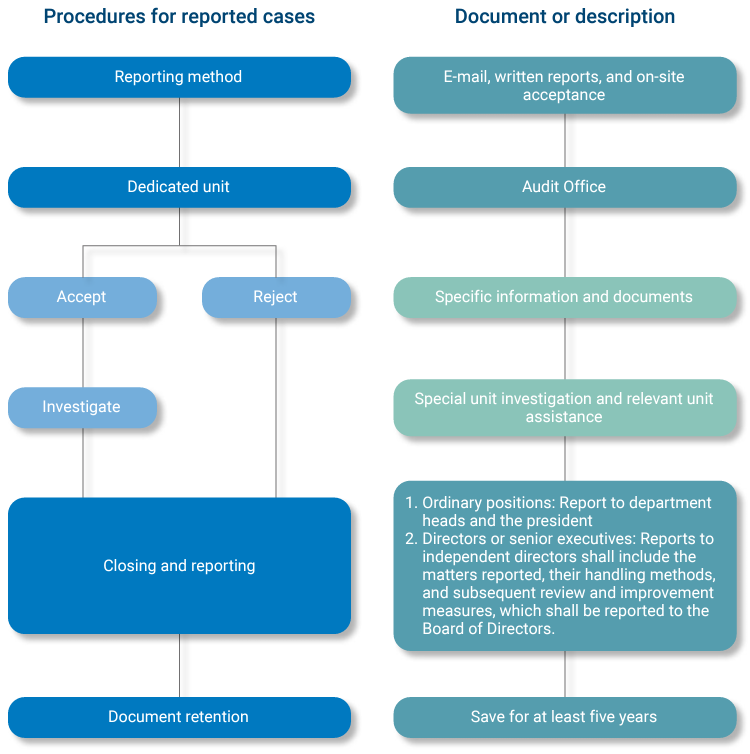
In order to establish an honest and transparent corporate culture and promote sound management, CSRC has a Reporting System for Violations of Professional Ethics. This includes instructions on reporting channels and processing procedures, ensuring the legal rights and interests of informants and related persons. For any internal or external stakeholders of CSRC, if they find anything that may endanger the reputation and the safety of the property of CSRC, or any corruption, theft, embezzlement, private practice, fraud, anti-competitive or other unethical and dishonest behavior, then reports and complaints can be made through the following reporting channels of CSRC:
-
1 Email reporting:mp.buster@csrcgroup.com 2 Written reports:Audit Office, International CSRC Investment Holdings Co., Ltd., 8F., No. 113, Section 2, Zhongshan North Road, Zhongshan District, Taipei City 3 On-site reporting department:The receiving department is the Audit Office of CSRC
The whistleblower can make a named report or an anonymous report, and can provide relevant specific information and documents. If the report is named, the reporter should provide their name and contact information. If the relevant information and documents are not complete, it will not be accepted.
CSRC has integrated the value of ethical management and ethical behavior into the Company’s business strategy, and cooperates with laws and regulations to establish relevant anti-fraud measures to ensure honest operation and ethical behavior. Through the Reporting System for Violations of Professional Ethics, we ensure that the opinions of internal and external stakeholders can be communicated through unobstructed channels. (The scope of application of this approach includes subsidiaries of CSRC, foundations where direct or indirect donations cumulatively exceed fifty percent, and other group enterprises and organizations with substantial control capabilities.) The dedicated unit is the Audit Office. When necessary, it will cooperate with Regulatory Compliance or other relevant departments to ascertain relevant facts.
For reported cases that are accepted, the identity of the informant, the content of the investigation, the investigation process and the investigation results are all properly kept and access rights are restricted. At the same time, it promises to protect the informant from being improperly dealt with due to the report. If the report is verified to be true, relevant units of CSRC will be instructed to review the internal control system and operating procedures, propose improvement measures and report to the Board of Directors to prevent the same incident from happening again. In addition, we also encourage internal and external personnel to report dishonest behavior or misconduct, and bonuses will be awarded according to the circumstances of the report.
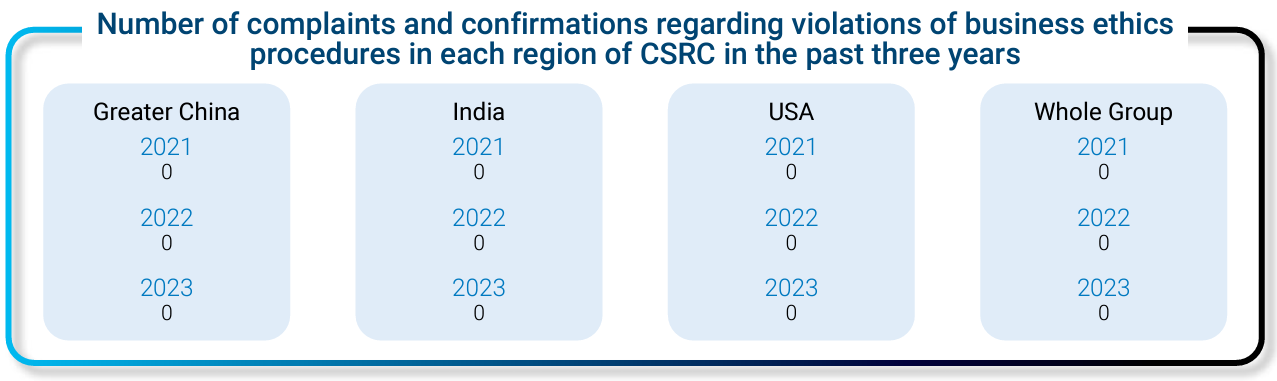
Statistics show that in 2024, no incidents of ethical management violations were reported through the aforementioned reporting system at CSRC Group. There were also no incidents of employees being dismissed or disciplinary actions being taken due to corruption, nor of business partners being terminated or not renewed due to corrupt violations; and there were no legal cases related to corruption among the Company or its employees.