The core philosophy of CSRC emphasizes “Renewable energy and resources”. Through proactive product research and innovation, we aim to develop innovative products of high added value in collaboration with our customers. Not only does this enhance product efficiency, but it also significantly reduces the environmental impact of industrial activities, promoting the entire carbon black industry toward low-carbon, sustainable development.
CSRC’s Carbon Black Business Group actively embraces the operational model of a circular economy to address the resource depletion issues inherent in traditional linear economies. This includes the repetitive use of energy and resources, extending resource lifespans, and reintroducing end-of-life materials into production to maximize resource reuse. CSRC has established a continuously cycling value chain 6R model: Reuse, Redefine, Redesign, Reduce, Recycle, and Renew. This strategy encompasses all stages, from raw material selection and manufacturing processes to product use. Through continuous research and innovation, CSRC aims to become a leader in sustainable development, guiding the industry toward a future of lowcarbon production.
Circular Economy Management Principles
| 6R concepts | Description | Implementation stage | Related sustainability actions |
|---|---|---|---|
| Recycle | Return to the original end of use for reuse | Manufacturing |
|
| Reuse | Non-return to the original end of use for reuse | Product end-of-life |
|
| Reduce | Reduce hazards and energy resource consumption generated during the production process | Raw Material Manufacturing Product end-of-life |
|
| Redefine | Adjust operating parameters to achieve energy savings and emission reduction in the manufacturing process. | Manufacturing |
|
| Redesign | New product development - Environmentally friendly green products | Usage Stage |
|
| Renew | Promote digital transformation, leveraging AI modules to enhance factory production stability | Manufacturing |
|
The carbon black industry chain is a paradigm of the circular economy model. Its raw materials come from residual byproducts, such as bottom oil from the refining processes of upstream petrochemical and steel industries. These low-value residuals, after chemical treatment and reuse, can produce high-value products like carbon black, along with byproducts such as steam and electricity, while also sequestering carbon. Typical incinerators operate at temperatures of 600–800°C, and burning industrial waste still results in air pollution emissions. In contrast, the reactor furnace in the carbon black process reaches temperatures of 1,800°C, allowing CSRC to process residuals (bottom oil) from the petrochemical and steel industries. At such high temperatures, it can eliminate many environmentally harmful substances, such as dioxins. This carbon black cycle not only fully utilizes residuals from traditional processes and reduces environmental pollution risks but also fosters new industries and technologies, creating an economic model for resource recycling.
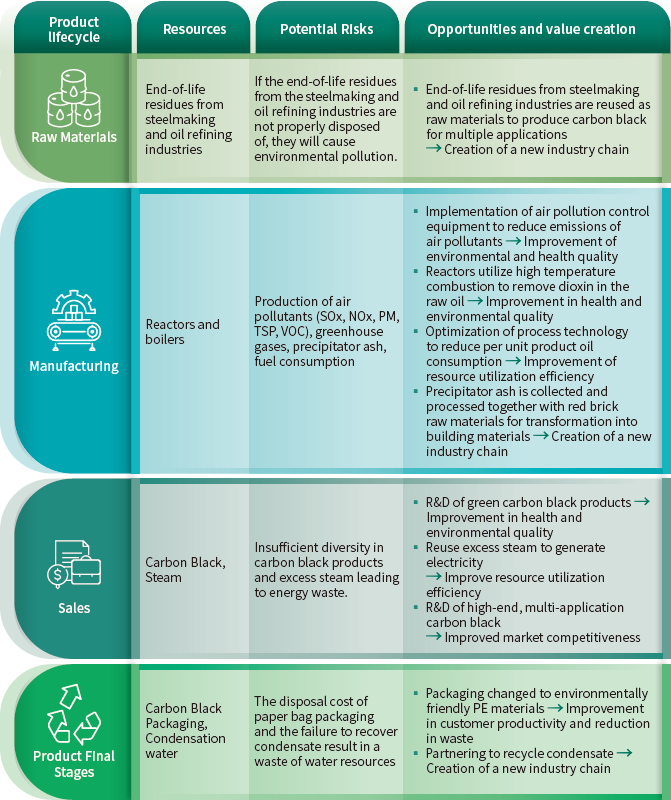
Beyond considerations for its own operations, CSRC extends the circular economy to downstream supply chains and external partners. By assessing potential risks and opportunities related to energy and raw material usage, we formulate corresponding actions and strategies.
CSRC Circular Economy Pathway
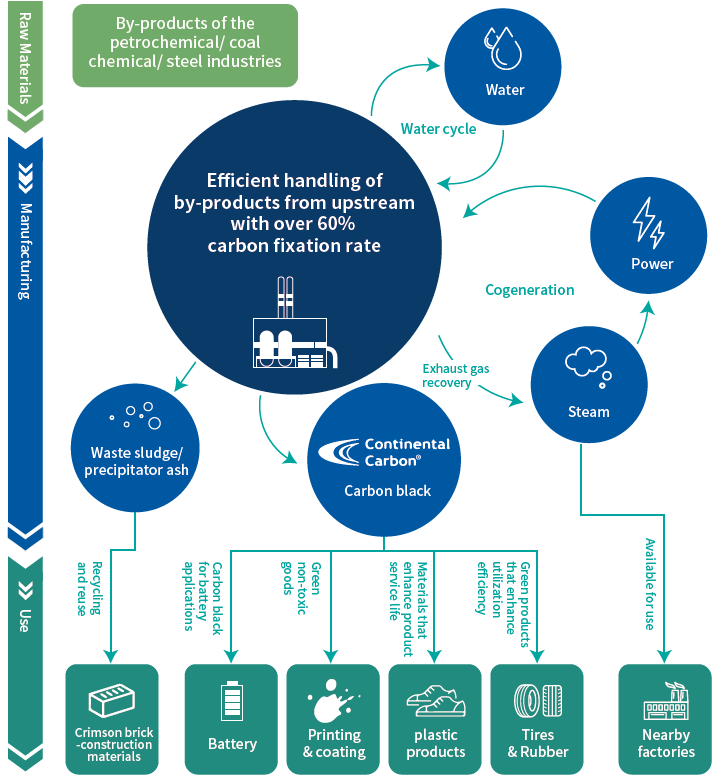
Circular economy management framework
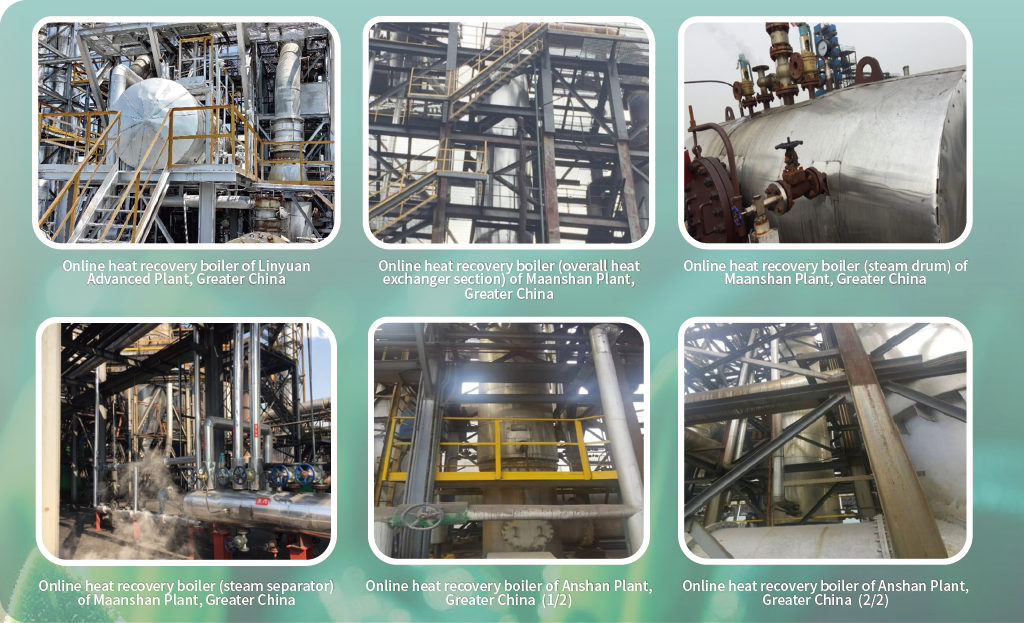
Recover waste heat to produce steam for process use, with surplus steam used for power generation in the plant or sold to nearby partners
In terms of energy recovery and reuse, all plant sites are equipped with cogeneration boilers that use carbon black tail gas as fuel for power boilers. This not only effectively improves energy utilization efficiency but also fully leverages tail gas generated during the process as fuel. While treating tail gas, heat is recovered, achieving the goals of a circular economy. Due to the high moisture content of carbon black tail gas, higher combustion temperatures are required. Additionally, the carbon black process often experiences fluctuations in tail gas due to cooling factors, leading to unstable combustion under stringent temperature and pressure conditions, posing certain risks to the system.
To ensure safety in the use of carbon black tail gas combustion and to enhance efficiency, CSRC has specifically constructed "Online heat recovery boiler" for heat exchange with flue gas. This reduces the flue gas temperature before entering the filter bags while also reducing the moisture content of the tail gas, achieving water conservation and heat recovery, thereby reducing energy consumption within the plant. These boilers also produce steam for heating oil tanks or use in carbon black production lines. Surplus steam can be reused for power generation, supplying internal operations or sold to nearby plants. By using CSRC’s steam, nearby plants can reduce fuel oil usage and associated air pollutants, achieving positive benefits in enhancing energy resource reuse and reducing environmental impact.
Recycled Building Materials: Waste recovery and reprocessing into downstream building materials
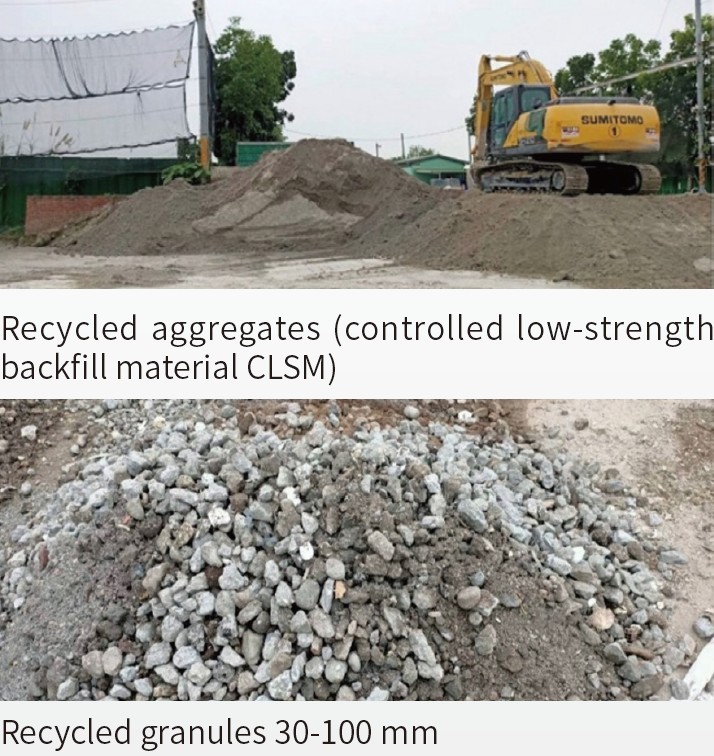
Specific solid waste produced by CSRC, after disposal, can be reprocessed into recycled materials. For example, precipitator ash undergoes physical treatment for detoxification, waste sludge undergoes heat treatment, and waste refractory materials undergo physical treatment, all of which can be reprocessed into building materials. Waste insulation cotton can be physically treated and recycled into insulation materials, and desulfurization gypsum can be used as a raw material for cement production. The recycling of these materials not only reduces the amount of waste sent to landfills or disposed of by CSRC but also effectively minimizes environmental impact and resource consumption.
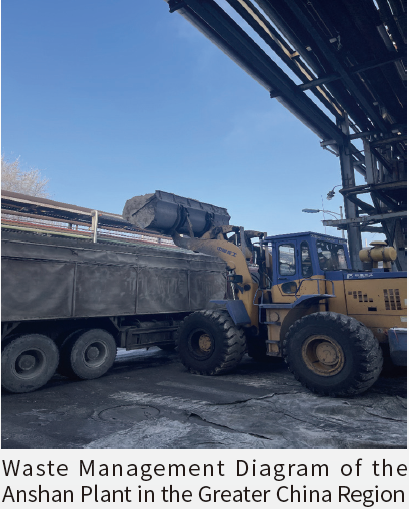
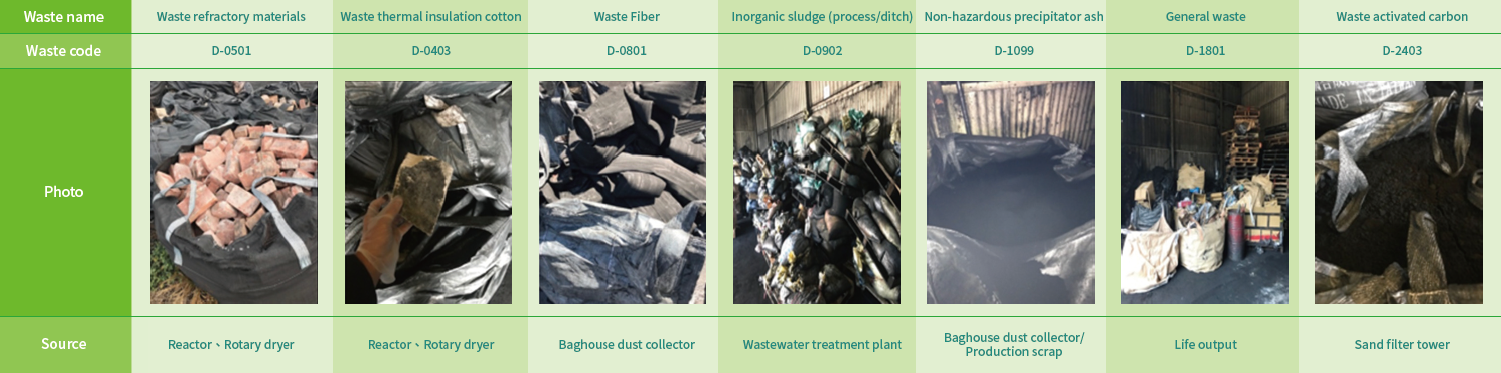
In addition to recycling and reusing internally generated waste (see 5.2.1 Waste Handling), CSRC promotes waste reduction strategies and actions across its plants as follows:
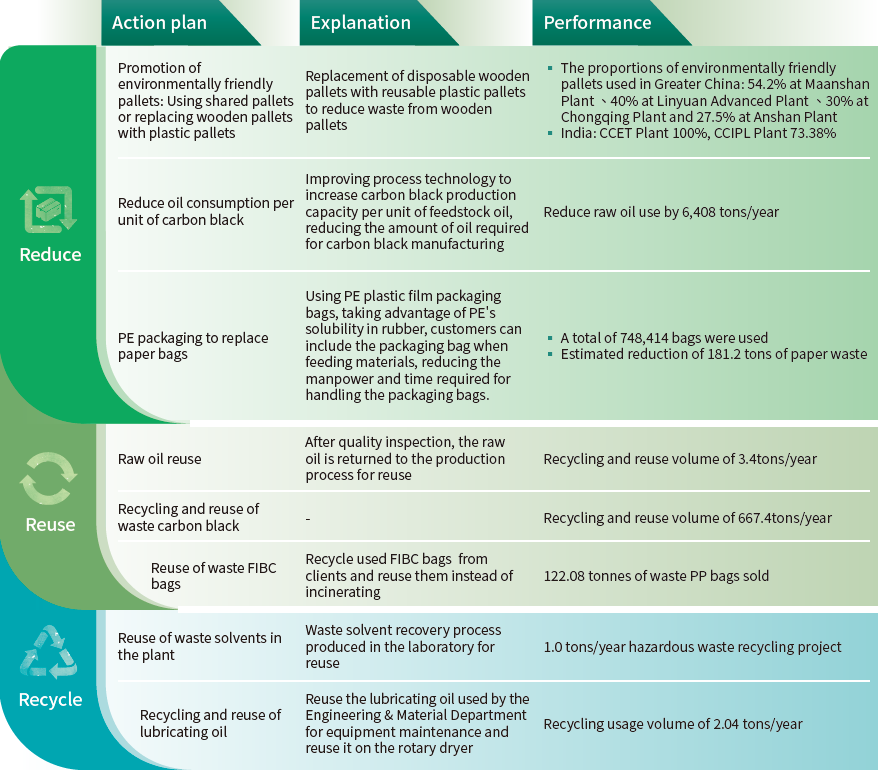
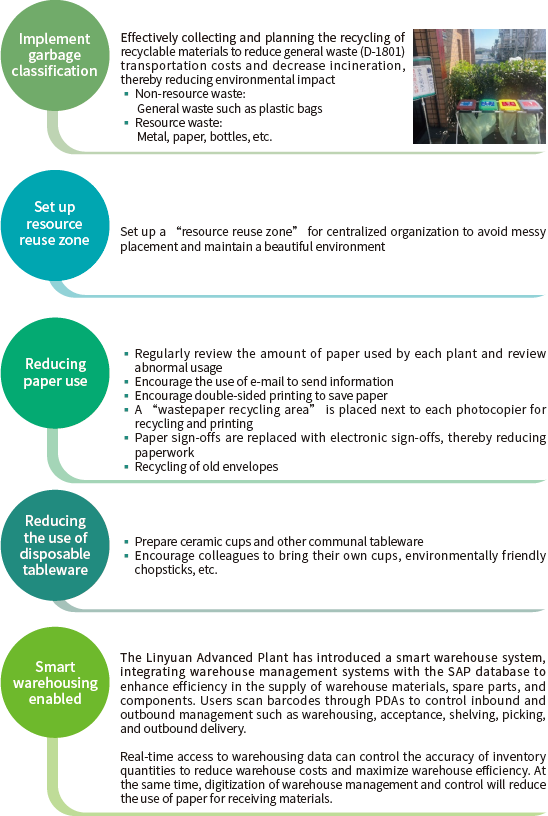
Office waste reduction measures
In addition to reducing the waste generated in the carbon black process, some factory sites are also actively promoting the following office waste reduction measures: