綠色營運
環境政策
國際中橡深知地球資源有限,因此環境保護一直以來是我們極重視之面向,除透過循環經濟找出經濟與環境的平衡點、善盡資源使用外,國際中橡亦秉持關懷環境、珍惜資源的精神,制定「與環境和諧共生、為社會永續經營」的環境經營理念,並於國際中橡碳黑事業群設有安環中心,推動碳黑各廠之環境、工安、勞工人權等執行方案,並統籌主要環境政策方向,再由各廠安環室依照政策並執行環境管理方案。每季定期檢討,並向總廠長、總經理報告。


安環中心職責
- EHS 政策制訂﹑關鍵指標 (KPIs) 目標訂定﹑標準培訓﹑推動電子化管理系統建置新標準研究與導入。
- EHS 法規釋義及標準化推動、重大風險監控。
- EHS 變更管理政策及技術標準制訂。
環境管理系統
自 1997 年因應國際化環保要求,台灣林園廠即導入 ISO 14001 環境管理系統,並取得 ISO 14064-1 溫室氣體盤查標準的國際標準認證;大陸地區各廠也導入 ISO 14001 管理系統,同時每年通過當地質量認證中心監督審核,提升國際中橡在節能、環保、生產製程的管理品質,和改善方案規劃的依循方向,落實國際中橡環境保護政策與降低環境衝擊影響。對於原料、製程與產品均秉持關懷環境、珍惜資源為最高管理原則。
-
林園先進材料科技ISO-14001有效期限 : 2024/08/29ISO-14001有效期限 : 2024/08/29
-
中橡 (馬鞍山) 化學工業ISO-14001有效期限 : 2024/01/25ISO-14001有效期限 : 2024/01/25
-
中橡 (鞍山) 化學工業ISO-14001有效期限 : 2022/10/08ISO-14001有效期限 : 2022/10/08
-
中橡 (重慶) 炭黑ISO-14001有效期限 : 2024/01/27ISO-14001有效期限 : 2024/01/27
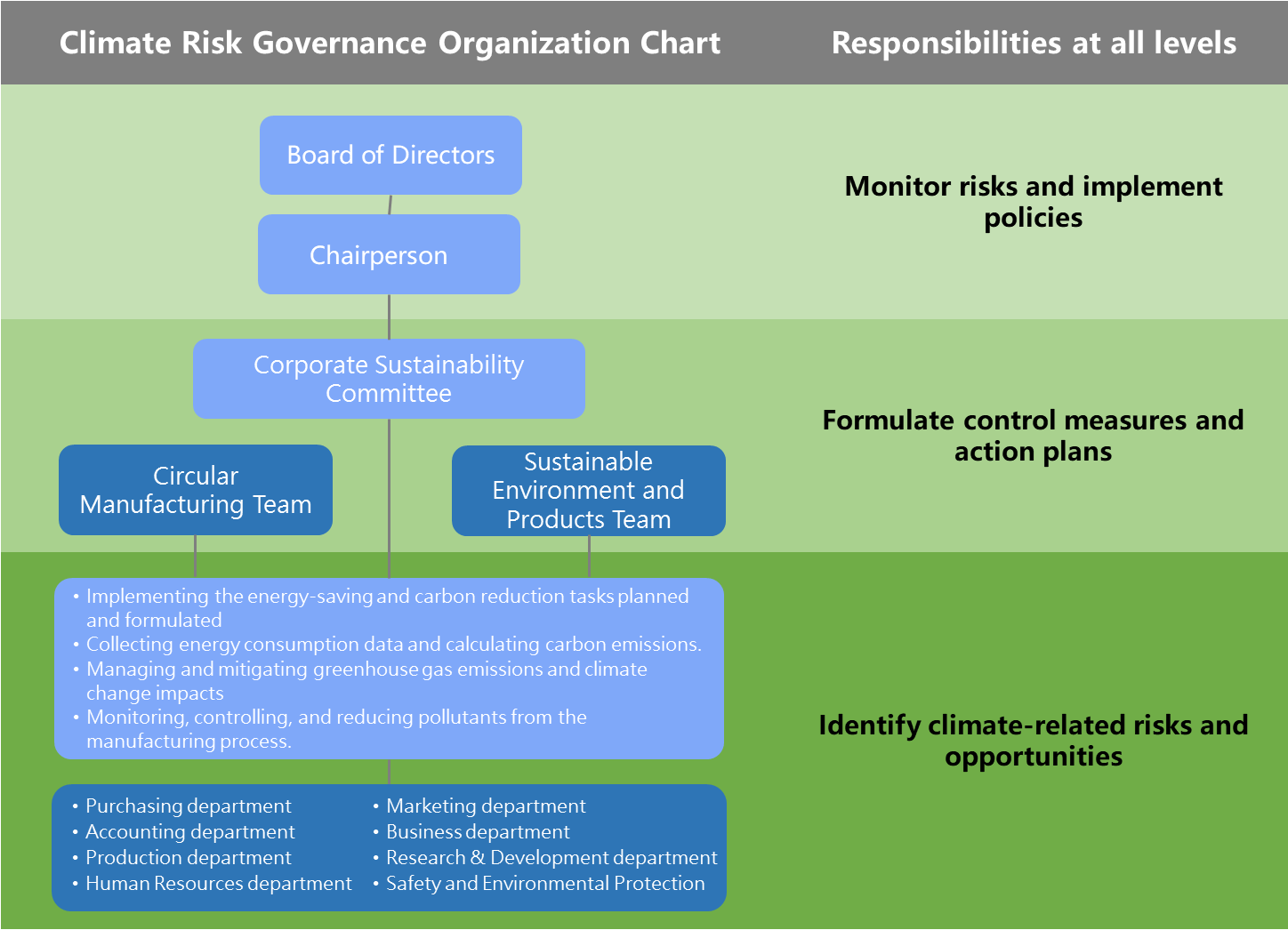
In climate governance, the Board of Directors serves as the Group’s top climate change governance body, which oversees the Group's climate change strategies and approaches. The Corporate Sustainability Committee has established the Sustainable Environment and Products Team that is operating across plants and units. It is responsible for planning and formulating carbon reduction, greenhouse gas emission, and climate change impact management and mitigation tasks.
We identify relevant climate change risks and opportunities through each operating plant and department, develop countermeasures, and report the identification results to the Corporate Sustainability Committee on a regular basis. The Corporate Sustainability Committee formulates control measures and action plans for various climate change-related risks and opportunities, adjusts and identifies climate change factors in a timely manner, and assigns each committee working group to implement control and action plans in accordance with the environmental policies.
The Corporate Sustainability Committee regularly reports the core climate risks and opportunities faced by CSRC, countermeasures, and the implementation results to the Board of Directors per year, so that the board can keep abreast of the climate-related risks and opportunities, decide on the relevant management policies, and supervise the implementation.
-
Linyuan Advanced Materials Technology Co., Ltd.ISO-14001Expiry date : 2027/07/23ISO-50001:2018Expiry date : 2026/01/10
-
CSRC China (Maanshan) CorporationISO-14001Expiry date : 2027/01/25
-
CSRC China (Anshan) CorporationISO-14001Expiry date : 2025/10/08
-
CSRC China (Chongqing) CorporationISO-14001Expiry date : 2027/01/27
-
Continental Carbon Eco Technology Private LimitedISO-14001Expiry date : 2026/03/08
-
Continental Carbon India Private LimitedISO-14001Expiry date : 2027/03/09
溫室氣體管理
國際中橡重視溫室氣體管控,其中林園廠每年通過第三方盤查溫室氣體排放,取得 ISO 14064-1 溫室氣體查證聲明書,並以盤查結果作為內部溫室氣體管理依據,釐清生產設備運作效能與作業流程效益,進而做適時調整。為響應氣候風險因應,管理層隨時注意環保署溫室氣體相關法規要求,嚴守規定,並且因林園廠為環保署公告應申報溫室氣體排放量的第二批排放源,所以盤查結果除作為後續推動溫室氣體管理之參考,亦定期於溫室氣體登錄平台申報。
林園廠溫室氣體排放統計
| 排放範疇 | 2019 | 2020 | 2021 |
|---|---|---|---|
| 範疇一 (噸CO2e) | 202,107 | 245,245 | 250,642 |
| 範疇二 (噸CO2e) | 14,402 | 11,485 | 7,392 |
| 總排放量 (噸CO2e) | 216,509 | 256,730 | 258,034 |
| 排放密集度 (噸CO2e/噸) | 2.27 | 2.69 | 2.47 |
- 溫室氣體排放計算採營運控制權法進行盤查,計算方法為活動數據*排放係數*GWP值 (排放係數值引用環保署溫室氣體排放係數管理表107年度版,GWP值係引用IPCC第四次評估報告(2007)),溫室氣體包含二氧化碳、甲烷、氧化亞氮、氫氟碳化物、全氟碳化碳、六氟化硫、三氟化氮。
- 在接受第三方溫室氣體查證時 2019 年之電力碳排係數還未公布,因此查證當下以 2018 年度排放係數 0.533kg CO2e/度進行計算。
- 範疇一排放源包含廢氣、重油、乙炔、柴油、車用汽油、水肥、液化石油氣。
Greenhouse gas management
Faced with global climate change, CSRC is continuously enhancing the Group’s resilience to climate-related risks and remains committed to mitigating greenhouse gas (GHG) emissions. CSRC conducts annual GHG inventories and formulates management policies based on the inventory results. These policies lead to the establishment of reduction targets and corresponding measures, including replacing traditional energy sources with low-emission alternatives and gradually introducing carbon capture technologies. Based on the GHG emissions and management conditions of each operating site, the Group has set a long-term carbon reduction target of a 21% reduction by 2030 compared to the base year of 2018.
To continually achieve our GHG emission reduction targets, the Group has developed specific strategies addressing both Scope 1 and Scope 2 emissions. For Scope 1 emissions, efforts are focused on enhancing energy efficiency, upgrading process equipment, and setting goals for equipment renewal. Additionally, the Group seeks to reduce crude oil consumption by improving overall production efficiency. In the Greater China region, the Linyuan Advanced Plant and Chongqing Plant transitioned to natural gas as a cleaner alternative to heavy fuel oil in 2023. In order to effectively improve the combustion efficiency of the heating furnace, the Maanshan Plant has upgraded the U6 air preheater and increased the heat exchange area to raise the air inlet temperature, thereby reducing fuel consumption. In the United States, tail gases are utilized to generate steam and electricity for on-site use, supporting energy self-sufficiency and contributing to the energy needs of surrounding communities. In India, the facilities are continuously optimizing process parameters and upgrading the tail gas dryer systems to reduce future dependence on high-carbon fuels.
In terms of Scope 2 emissions reduction, the Linyuan Advanced Plant in Greater China has repurchased solar panels previously operated by Chailease, and is gradually planning to increase the use of renewable energy in the future. At the CCIPL Plant, wind turbine motors have been replaced with high-efficiency models, effectively reducing energy consumption while achieving both economic and emission reduction benefits. In the United States, the facility has re-evaluated and optimized the selection of rotating equipment to enhance operational efficiency. Additionally, the site has partnered with local utility providers to purchase renewable electricity. This strategic shift toward renewable energy serves as a cornerstone of the Group’s GHG mitigation strategy. Moving forward, the Group will actively explore opportunities to integrate more renewable energy sources into its operations.
To effectively achieve greenhouse gas emissions reduction targets, the Group has established a Carbon Management Task Force comprising members from the Technology Department, the EHS Department, and representatives from each operating site. In the Greater China region, a cross-site digital carbon emission monitoring system has been implemented, allowing real-time tracking of carbon emissions. Each month, CSRC calculates the financial impact based on local carbon pricing, providing this information to each site for review and improvement. Globally, CSRC holds regular meetings to review and track GHG emissions, with progress reports submitted to the Board of Directors. In addition, each plant is encouraged to share its emission reduction initiatives and performance results, fostering mutual learning among sites. The Greater China region has also incorporated monthly and quarterly GHG emission intensity figures into each plant’s key performance indicators (KPIs), which are linked to performance bonuses. This approach aims to motivate all employees to actively contribute to energy conservation and emission reduction efforts.
Roadmap for low-carbon transition of CSRC
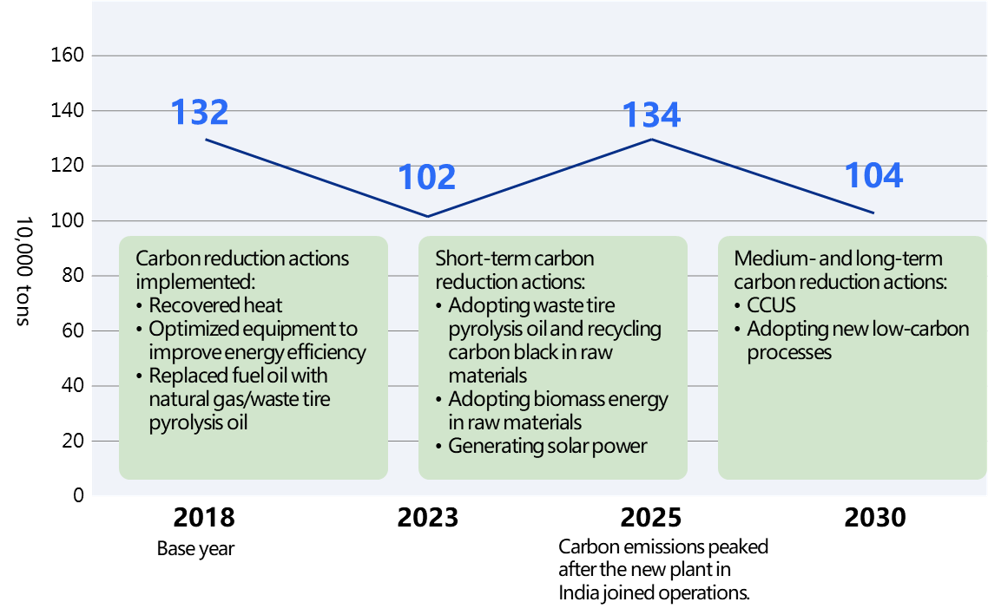
Note 1: The Group’s baseline year is adjusted to 2018 to align with the inclusion of the plants in the United States and India in the scope.
Note 2: The Scopes 1 and 2 emissions of all production sites are included in this report.
| item | 2018 | 2022 | 2023 | 2024 |
|---|---|---|---|---|
| Total greenhouse gas emissions (tCO2e) | 1,289,553 | 1,028,653 | 976,244 | 1,017,377 |
| Greenhouse gas emission intensity (tCO2e/t) | 2.61 | 2.74 | 2.80 | 2.64 |
Energy management
CSRC’s energy management is divided into two main directions: energy structure management and improving energy use efficiency.
Energy structure management primarily focuses on adjusting towards a circular economy model. Examples include recovering process tail gas to convert into steam for power generation used internally and externally, installing solar power systems to increase renewable energy production, and using biomass fuels to reduce greenhouse gas emissions as part of energy-saving and carbon reduction initiatives.
Improving energy use efficiency mainly involves enhancing equipment electricity efficiency, maximizing value by reusing heat energy, reducing purchased electricity demand, and regularly maintaining and replacing major equipment to sustain heat exchange efficiency.
To improve energy management performance, CSRC regularly compiles energy usage data from all operating sites to guide adjustments in energy policies. All related data are audited by the Management Department to ensure accuracy. The General Manager and Chief Strategy Officer participate periodically in these meetings to guide the company’s operational direction on energy conservation and emission reduction.
In 2024, CSRC total power generation from energy-saving projects related to energy structure management across all operating sites was approximately 304,284.1 MWh, including 1,610.7 MWh from renewable energy generation. For energy efficiency improvement projects, modifications to the reactor air preheater increased heat exchange area and efficiency, resulting in a total reduction of 4,677.6 tCO2e in greenhouse gas emissions.
All operating sites will continue to enhance their energy management capabilities. Since 2023, they have planned system assessments for replacing fuel oil with natural gas and renewable oil products. By gradually replacing high-emission fuel oils, the plan effectively reduces greenhouse gas emissions. The implementation of this plan in 2024 is expected to reduce emissions by a total of 14,588 CO2e.
空氣污染管制
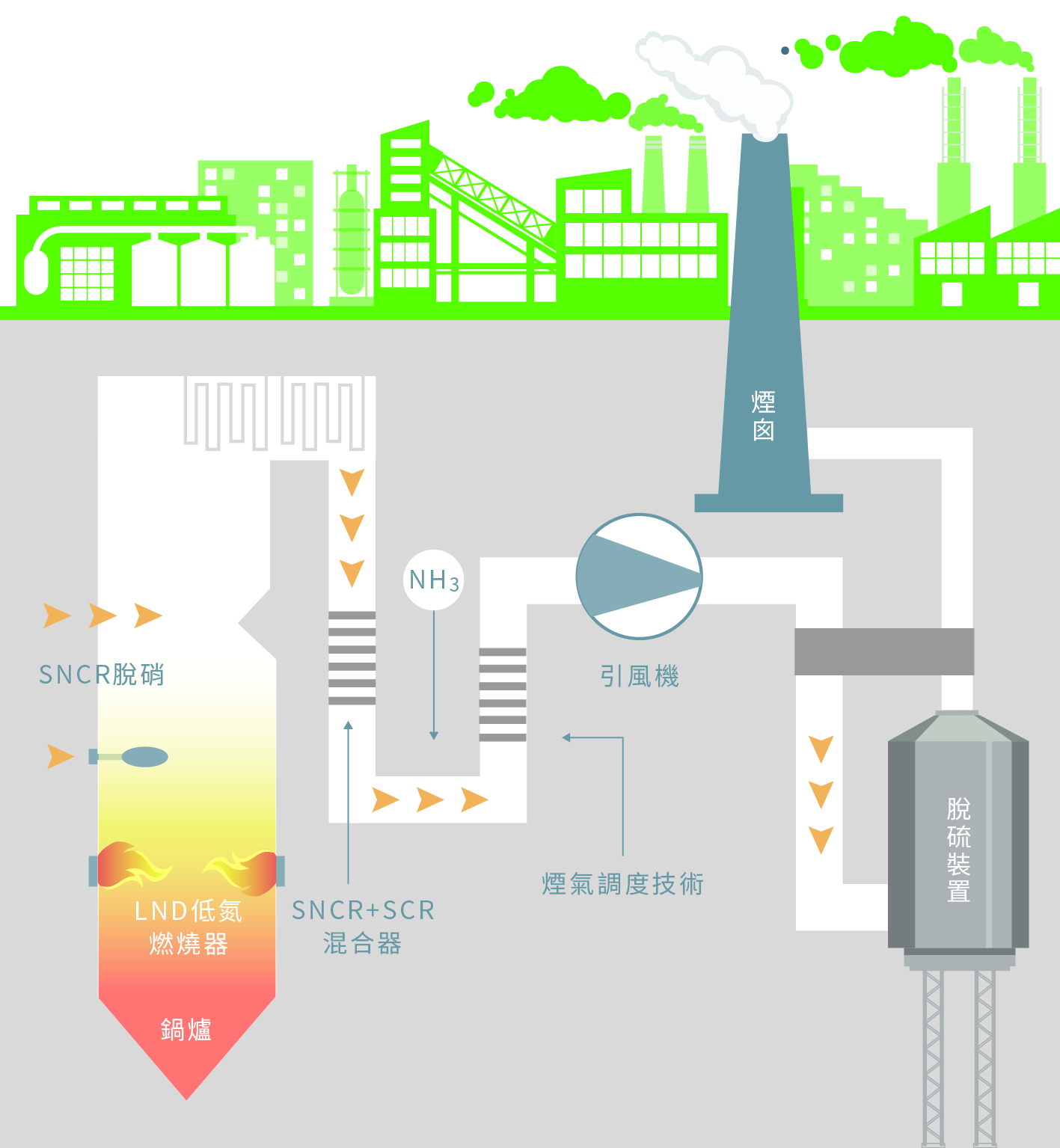
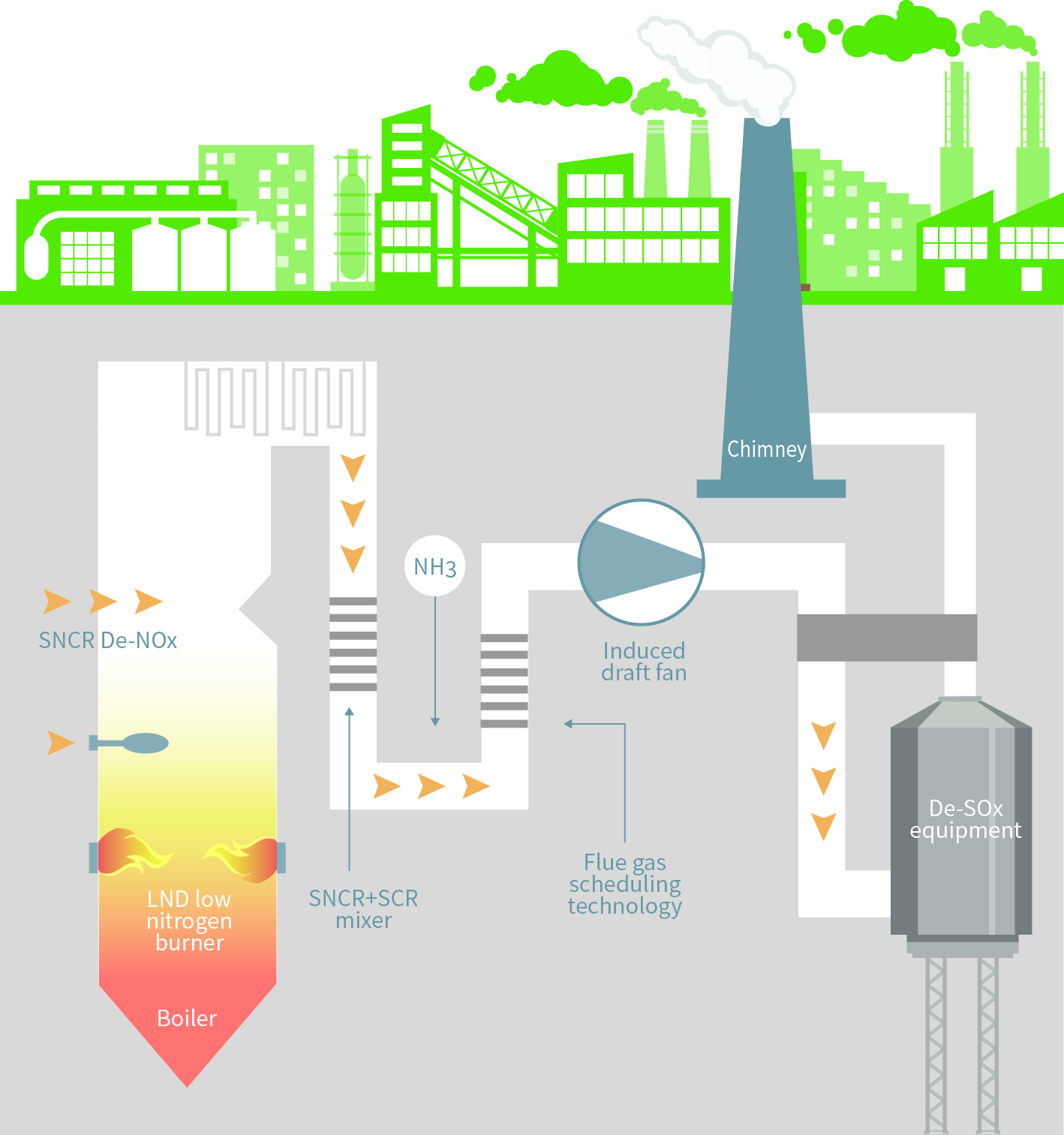
碳黑生產過程使用的原料油經反應器燃燒熱裂解及相關化學反應後,主要產生的空氣污染物有揮發性有機物 (VOCs)、硫氧化物 (SOx)、氮氧化物 (NOx)、粒狀污染物 (總懸浮微粒 TSP)。為減少環境衝擊,我們隨時監控氣體排放數據作為管理依據,並積極佈署空污減量措施。
揮發性有機物 (VOCs) 防制
為控制原料油槽的揮發性有機物,國際中橡在各貯槽上方安裝油氣收集系統,在呼吸閥設置連接管,利用動力風車抽風,使槽內維持微負壓,再將抽取的廢氣導入燃燒爐空氣使用,達到防制效果。
硫氧化物 (SOx) 防制
碳黑製程會使用煤焦油、原油裂解塔底油 (FCC),然而,煤焦油含硫量約為 0.3-0.5%,FCC 油品含硫量則高達 2-4%,均高於目前油品含硫量標準,因此需經過脫硫處理才能達到空氣污染物 SOx 排放濃度標準。為此,林園廠於安裝 De-SOx 脫硫設備於工廠煙囪之排放管道,成功將每月 SOx 平均排放濃度由 160 ppm 降至 22 ppm 以下,搭配低逸散設施,盡可能降低空氣品質的負荷量。
氮氧化物 (NOx) 防制
目前採用的減少氮氧化物 (NOx) 方法有:
- 煙氣回流分段燃燒:將煙氣分成三段燃燒,第一階段將部分煙氣回流至鍋爐燃燒區,供給小於完全燃燒的空氣量,達到稀釋氧氣濃度使燃料中的氮無法生成 NOx。第二及第三階段則進行殘餘的燃料與空氣燃燒,因為其燃燒速度較慢,可降低火焰溫度,同樣形成低氧濃度環境,減少 NOx 生成。
- 選擇性觸媒還原法 (Selective Catalytic Reduction, SCR) 脫硝系統:為目前最普遍且脫硝效率最高之技術,效率可達 90% 以上 (以環保局 NOx 排放濃度 30 ppm 計算),成功解決林園廠鍋爐尾氣產生之煙道氮氧化物排放問題。
粒狀污染物 (總懸浮微粒 TSP) 防制
廠區持續改善生產設備以減少污染物產生,如針對袋式集塵器進行濾煙袋提前更新,及研發圓形脈衝清洗式袋式集塵器,對粒狀污染物防制可達 99% 以上之集塵效率。此外,導入 PDA 巡檢系統,能隨時掌握生產狀況並即時調整,有效解決原設計的袋式集塵器易堵塞積碳、漏煙等缺失。
用水管理
我們嚴格控管水資源使用情況並持續提升水循環使用效率,避免過度取水造成周圍環境的傷害,並且將推動水資源平衡計畫,其中包含 2020 年起與鄰近工廠合作,蒸汽銷售予鄰近工廠合作夥伴後,合作夥伴將製程產生之冷凝水,輸送回林園廠再做使用,擴大水循環影響力。
水資源使用統計
| 項目 | 2019 | 2020 | 2021 |
|---|---|---|---|
| 製程自來水用量 (m3) | 1,469,105 | 1,475,518 | 1,352,859 |
| 製程回收水用量 (m3) | 174,897 | 176,735 | 109,123 |
| 製程總用水量 (m3) | 1,644,002 | 1,652,253 | 1,461,982 |
| 製程水回收率 (%) | 12 | 12 | 8 |
| 用水密集度 (m3/噸) | 17.3 | 15.5 | 14.0 |
廢棄物處理方法
國際中橡強調廢物利用的循環經濟精神,妥善處理事業廢棄物,恪遵各項廢棄物法令要求,並尋找資源再利用的契機。我們依環保署「事業廢棄物管理作業程序」進行內部先行處理,之後委託合格的廢棄物處置承包商做後續清除工作。
廢棄物處理統計 (單位:噸)
| 處理方式 | 2019 | 2020 | 2021 |
|---|---|---|---|
| 焚化處理 | 750.16 | 646.7 | 592.1 |
| 掩埋 | 104.51 | 0 | 17.2 |
| 熱處理 | 115.86 | 109.1 | 144.9 |
| 物理處理 | 232.23 | 155.5 | 502.0 |
| Recycling (tons) | - | - | 6 |
| 合計 | 1,054.43 | 1,353.42 | 1,262.2 |
Water usage management
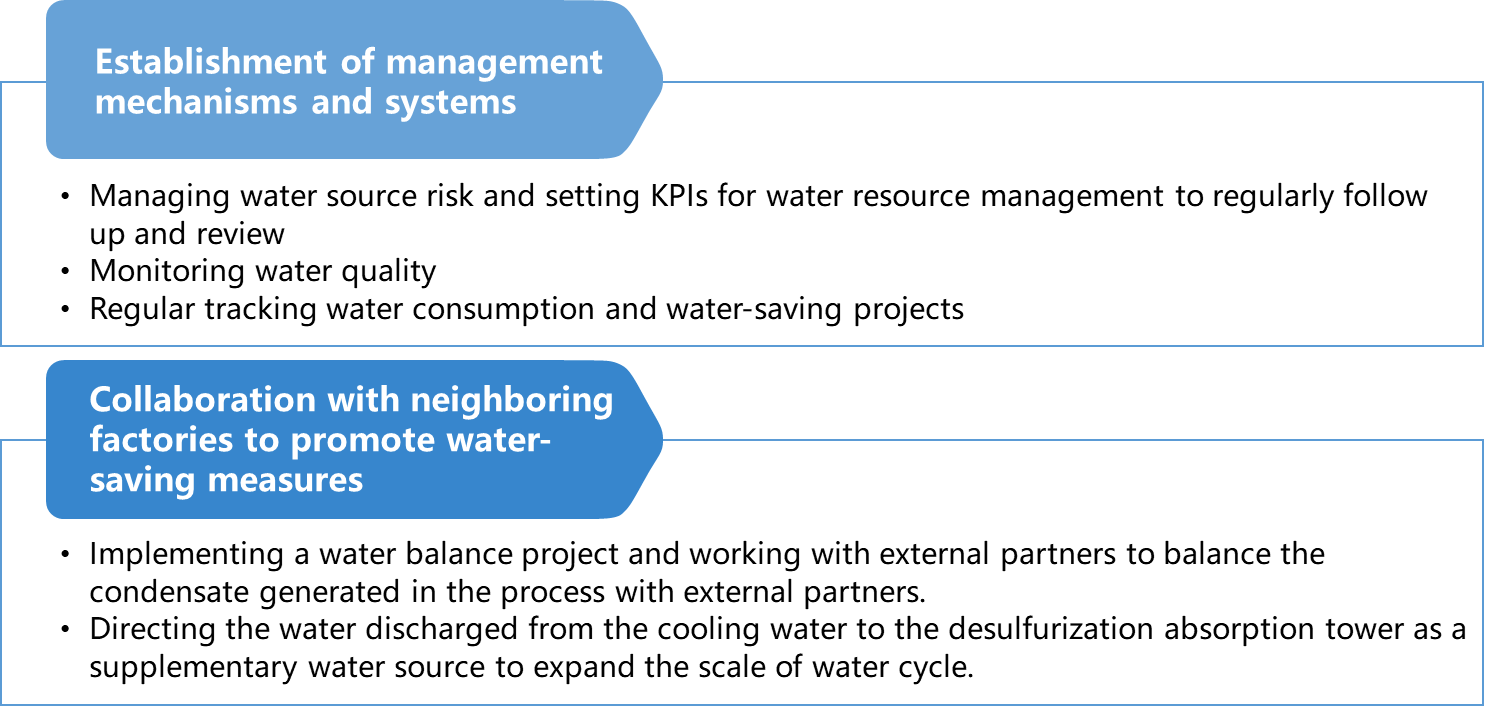
CSRC strictly controls the use of water resources and continues to improve the efficiency of water circulation to prevent damage to the surrounding environment caused by excessive water intake. Linyuan Advanced in Greater China and the operating plants in the United States have implemented a water balance project and continue to adjust the water resource consumption on a rolling basis. They work with neighboring factories to sell steam to neighboring factories, and the external partners transport the condensate generated in their processes back to the plants for reuse. Other internal water-saving actions include the following: diverting cooling water discharged from the cooling water to the desulfurization absorption tower as a supplementary water source, to expand the scale of water cycle; and regularly examining and repairing leaks in the plant's pipelines to reduce the risk of water waste. In 2024, we continued to take water-saving measures and reviewed the room for improvement in practical operations to achieve the best water resource use efficiency.
Water resource management methods and implementation plan of CSRC
In 2024, CSRC's total water intake was 4,783 thousand m3, which came from third-parties’ water, groundwater, well water, and condensate, and the water was used for processes, packaging, and office administration in the Group as a whole. Water intake was 2,321 thousand m3 in Greater China, 1,295 thousand m3 in India, and 1,167 thousand m3 in the United States. The reason for the increase in water withdrawal in the India region in 2024 is the higher production volume at the CCET plant in 2024 compared to 2023.
Waste disposal
CSRC complies with various waste disposal laws and regulations to ensure that all waste generated is properly disposed of. In order to live up to the spirit of responsible production and circular economy, each plant has kept abreast of the source, type, and quantity of various waste resources, and ensured that their disposal methods and flows are in compliance with all environmental laws and regulations, to further achieve the goals of cleaner production, resource recycling and industrial waste reduction to achieve the goals of pollution reduction, waste reduction, and environmental protection. In 2024, the Group achieved a waste recycling rate of 78.9%, of which 84.5% in Greater China, 89.5% in India, and 73.1% in the United States. Each plant within the group will continue to strive for waste reduction improvements to achieve short-term goals.
In 2024, CSRC Group's total waste generation was 13,308 metric tons, a decrease from 13,727 metric tons in 2023, primarily due to enhanced waste management at the Ponca plant in the U.S., which reduced non-hazardous waste output.
Note: Total waste generated = non-hazardous waste + hazardous waste